
Reinventing the Victorian Terrace
This project explores a pressing architectural question: how can the traditional Victorian terraced house be transformed to meet the needs of contemporary family life?
Terraced housing accounts for approximately a quarter of the UK’s housing stock, therefore defines the urban fabric of many towns and cities. These homes are often well located, embedded within thriving communities, supported by strong transport links, and within easy reach of local amenities. Yet despite these advantages, their constrained layouts, limited floor area, and often poor thermal performance frequently force growing families to relocate in search of larger suburban homes.
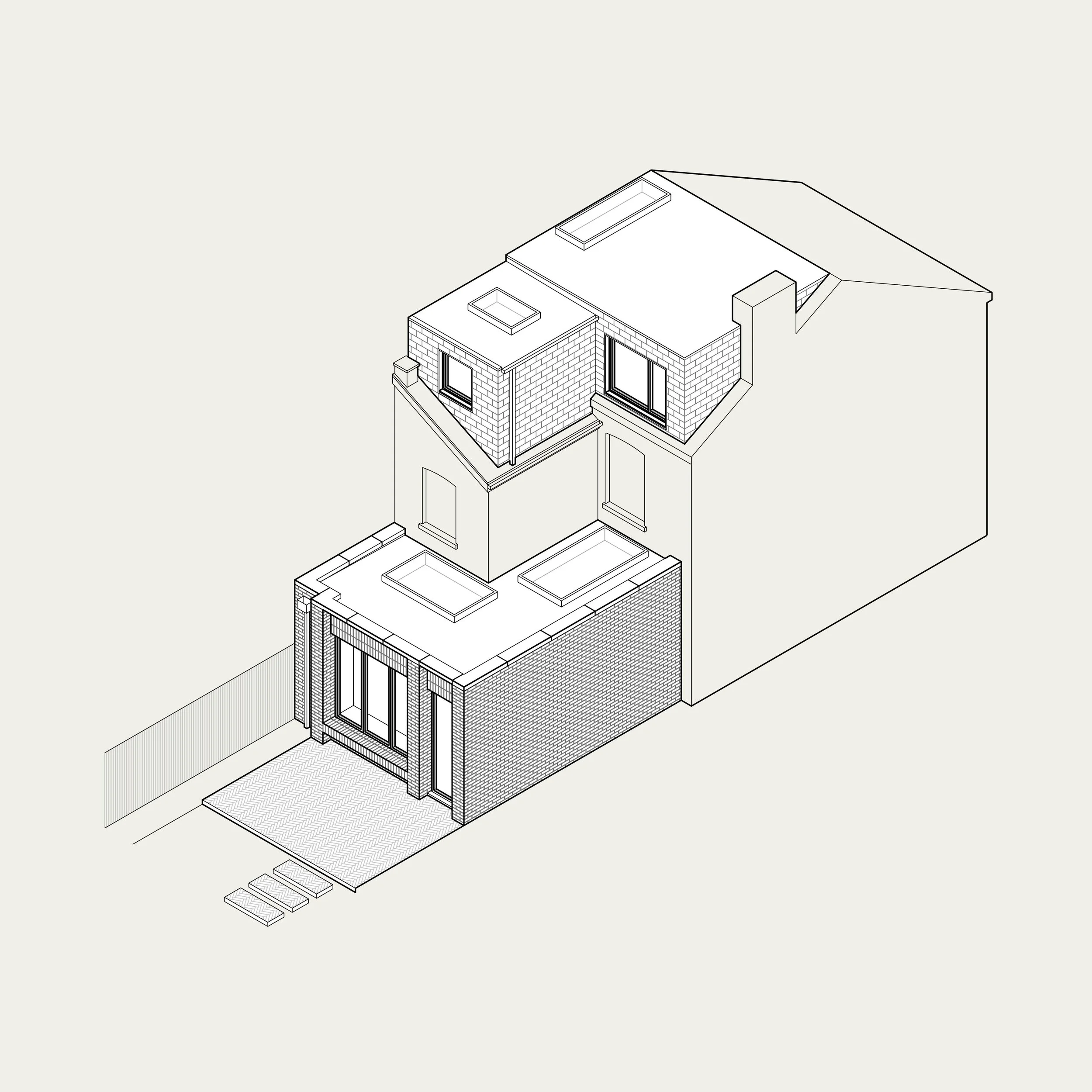
This scheme challenges that pattern. It proposes an intelligent reinvention of the traditional Victorian terrace to support modern family living, while preserving the building’s identity. By extending, reconfiguring, and upgrading the existing fabric, this project achieves meaningful spatial gain far more sustainably than through new-build expansion at the urban edge. It offers an alternative solution, one where families remain at the heart of urban life, reducing both social displacement and environmental impact.
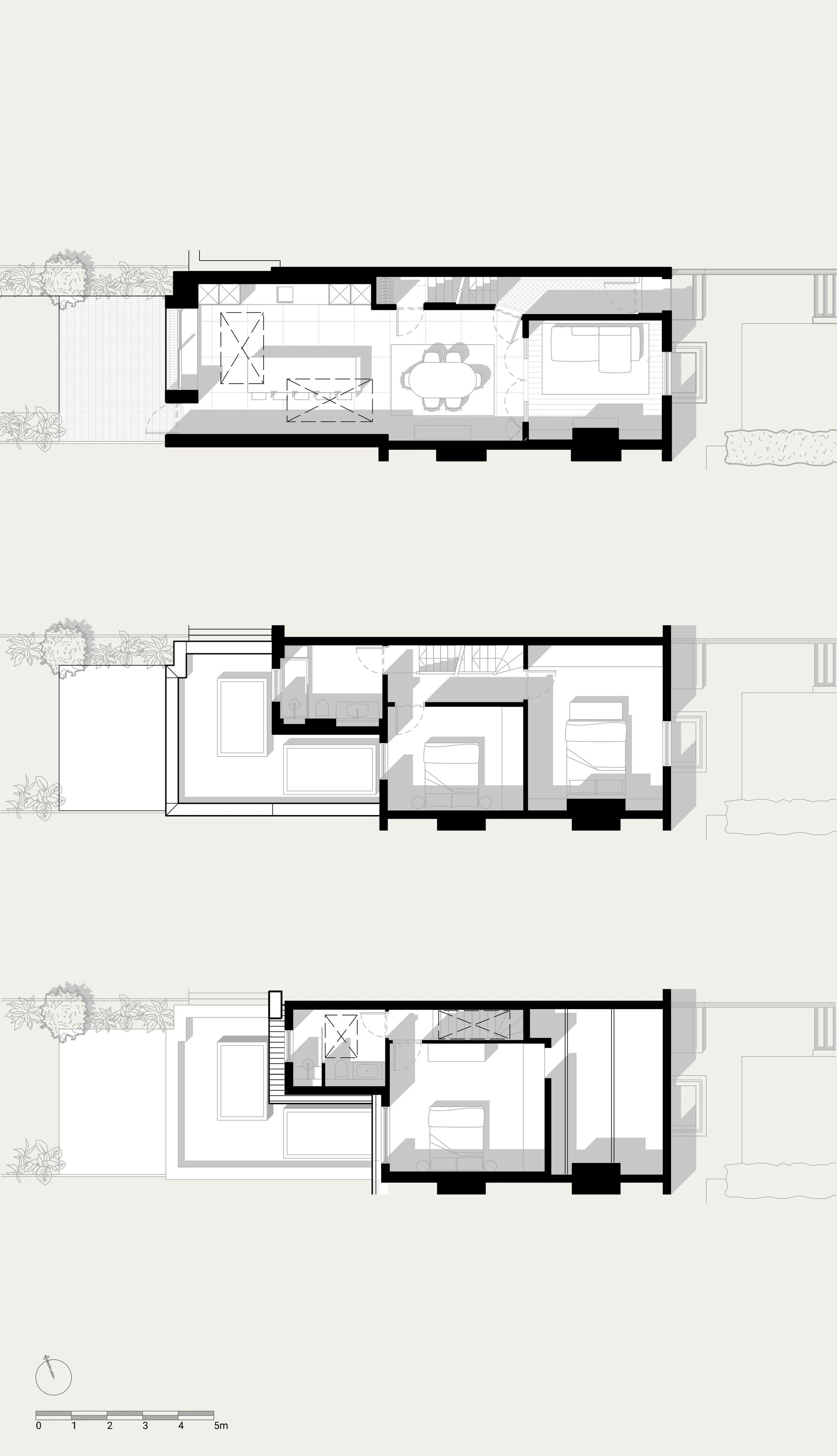
Like many Victorian terraces, the original house comprised of a sequence of narrow, cellular rooms with limited natural light. Much of the design process centred around expanding and improving the footprint of the home within the strict confines of current planning policy, while retaining the property’s period architectural character.
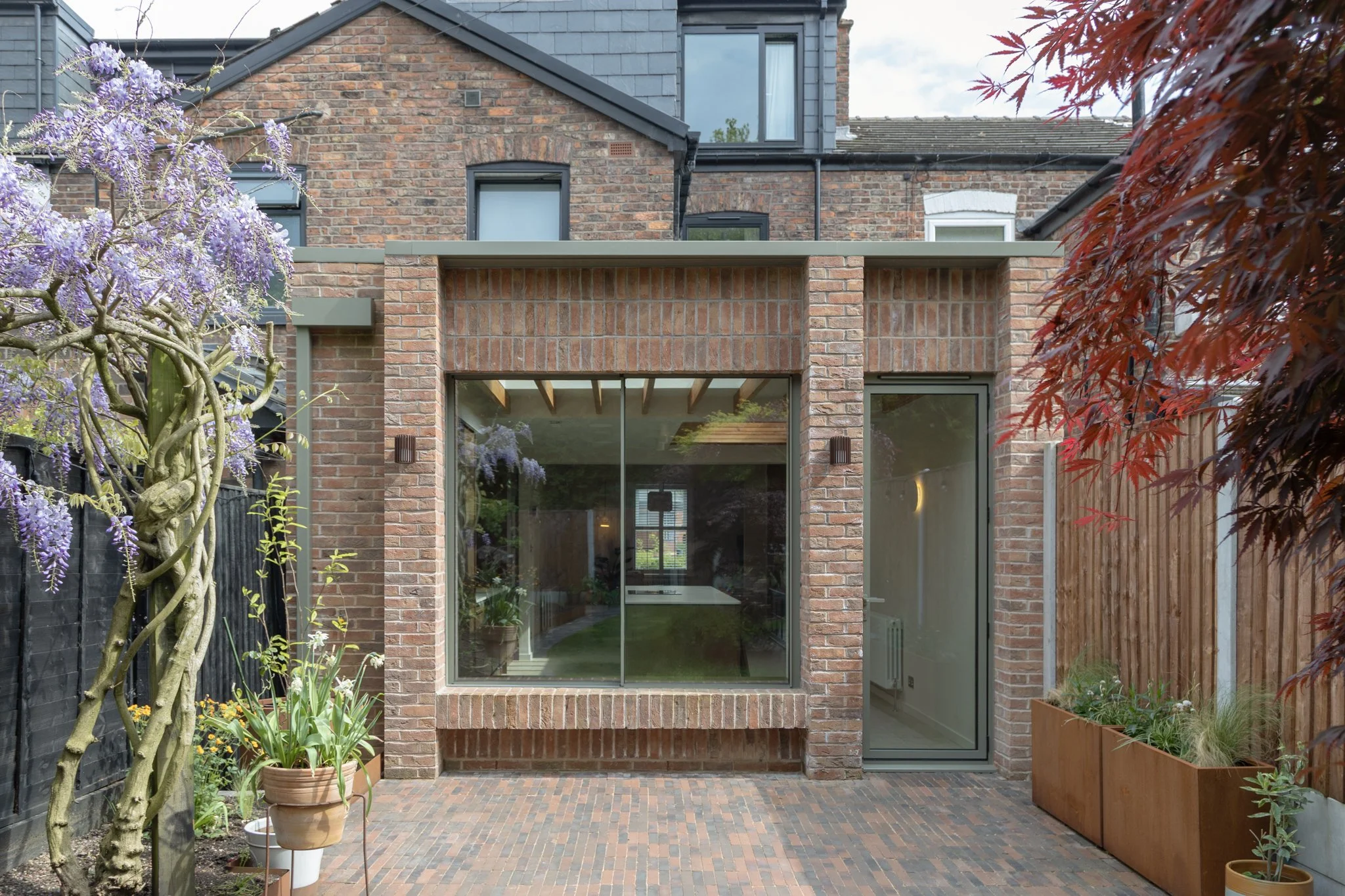
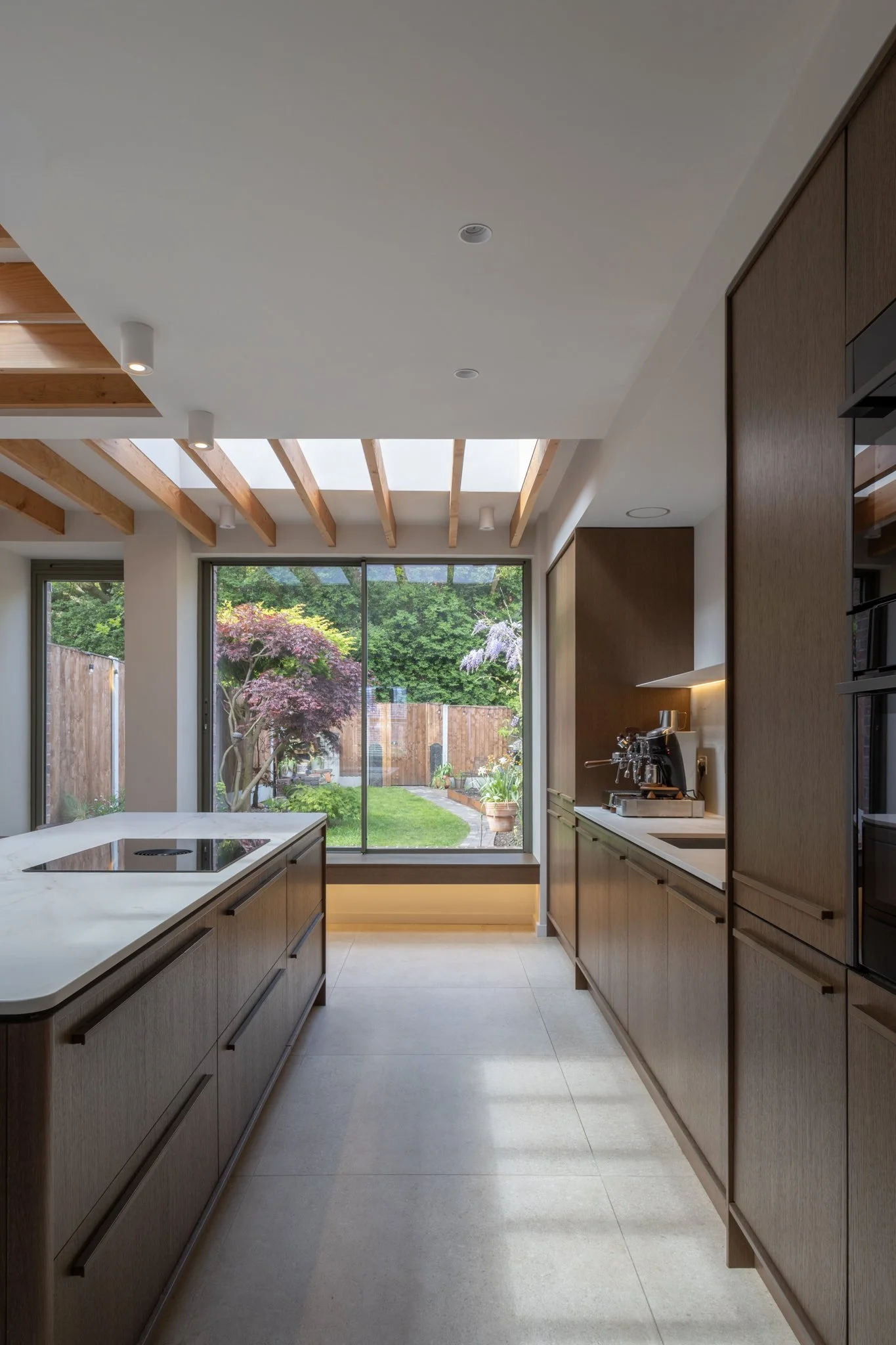
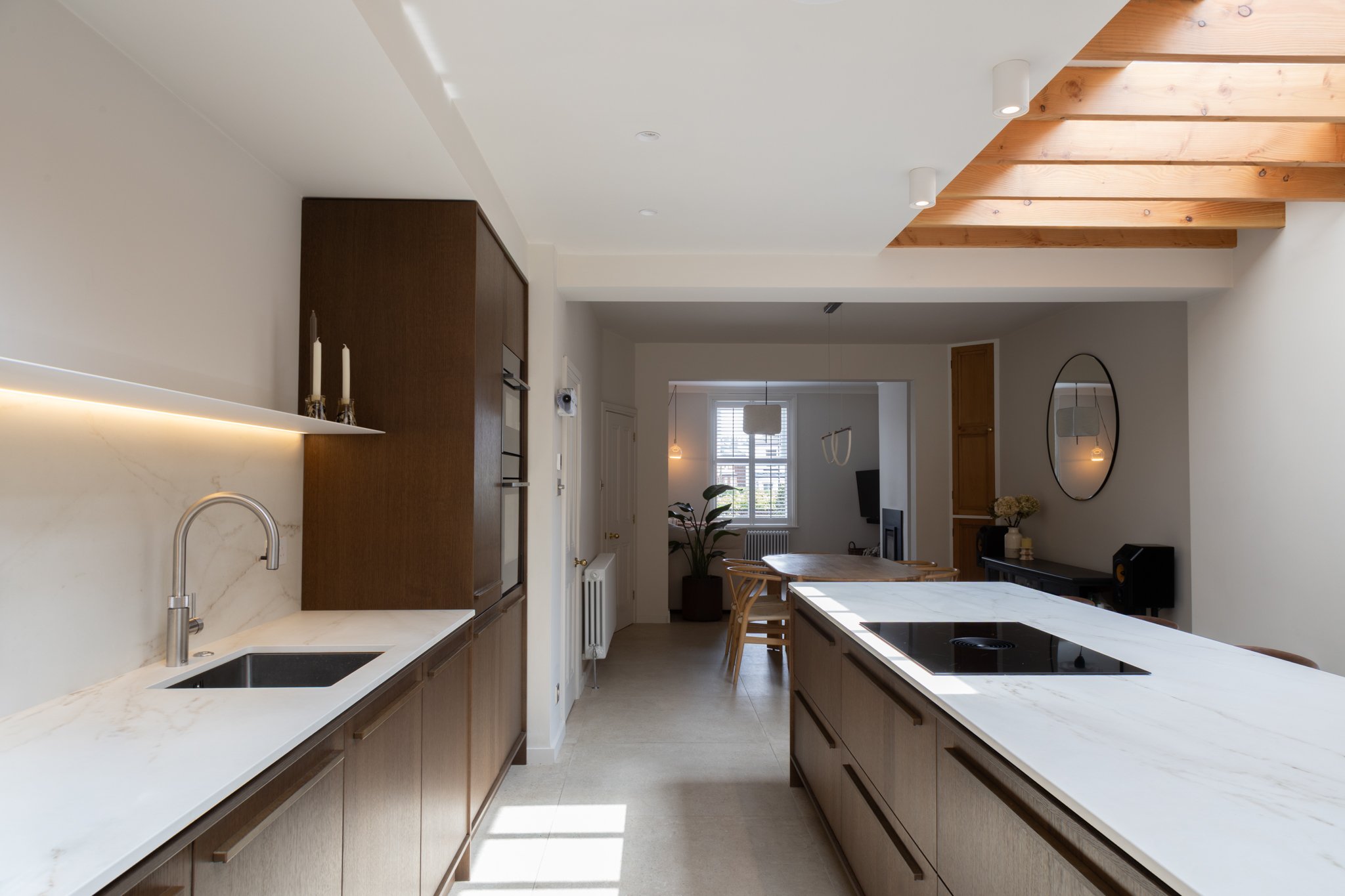
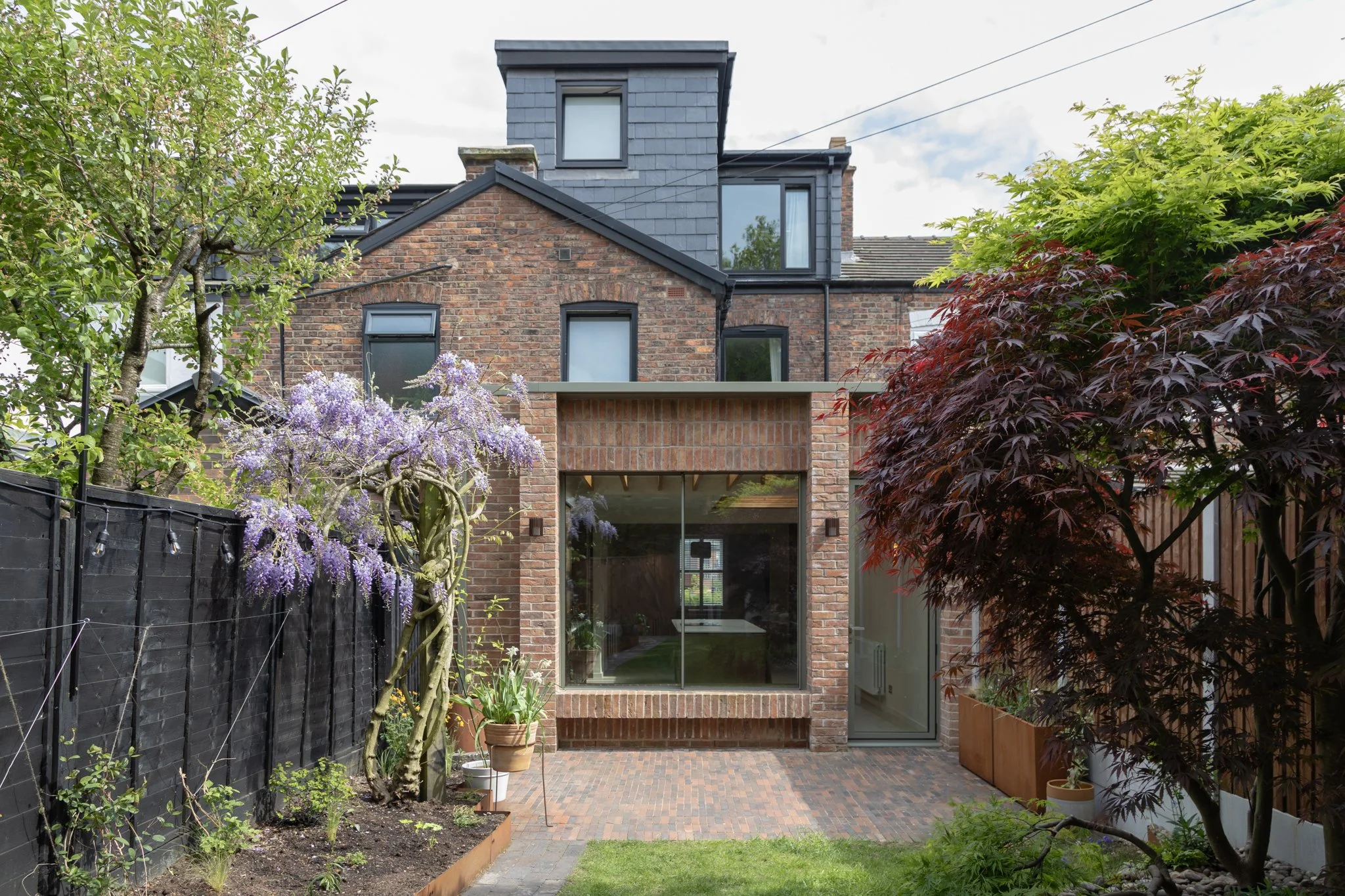
At ground floor level, a full-width rear extension creates a generous open-plan kitchen and dining space, which is bright, expansive, and centred around family life. A series of rooflights draws daylight deep into the plan, transforming what was once a dark interior into a light-filled living environment. At the rear of the home, a large, sliding picture window mimics a traditional bay window but in contemporary form. Internal and external window seats frame views of the newly landscaped garden, creating both a focal point and a quiet place of retreat.
The project has achieved greater visual connectivity and flexibility of use by opening up the ground floor. Formerly separated living spaces now function as interconnected rooms for dining, gathering, and relaxation, while long views through the full depth of the house reinforce a new sense of flow and cohesion.
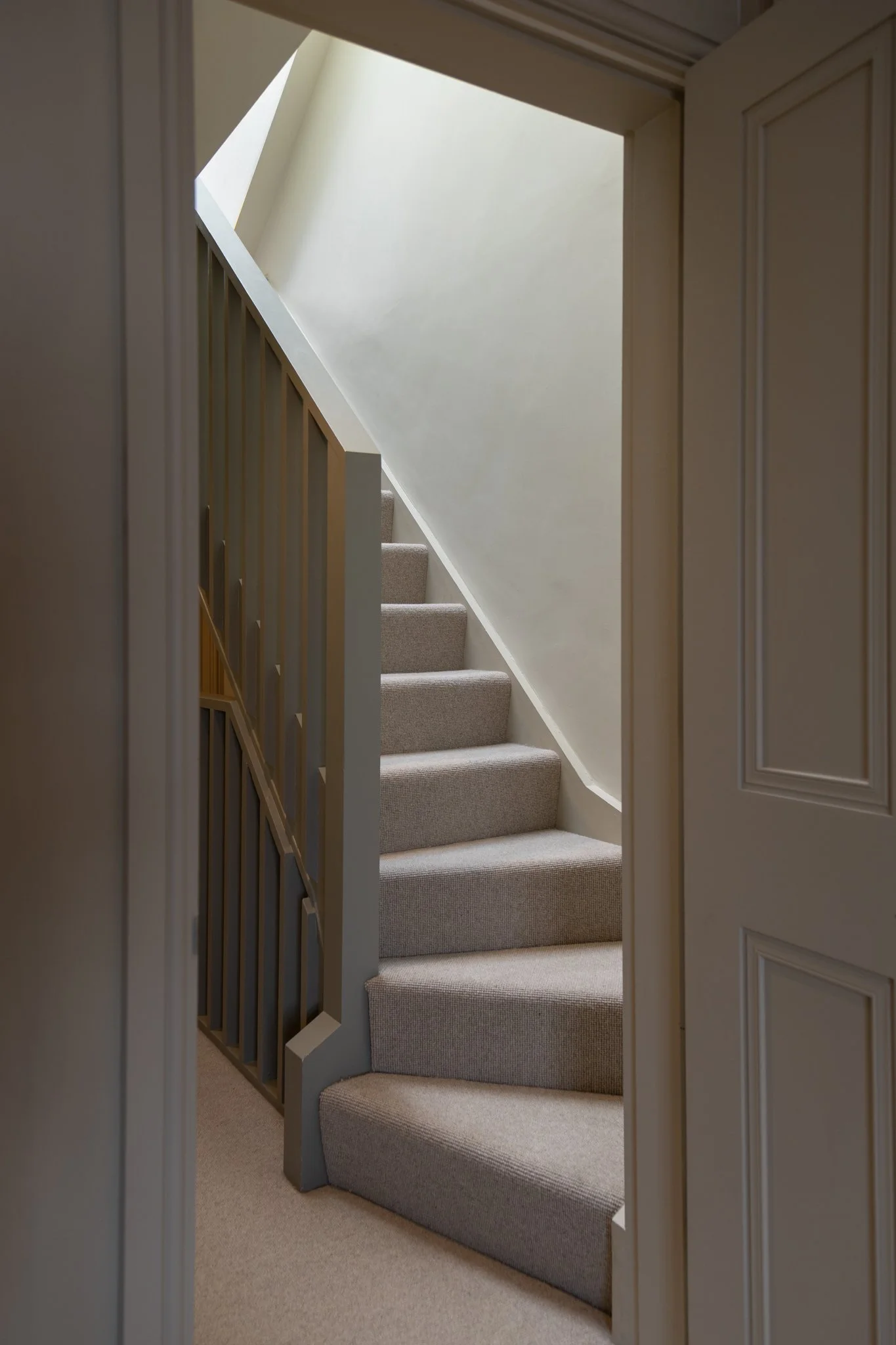
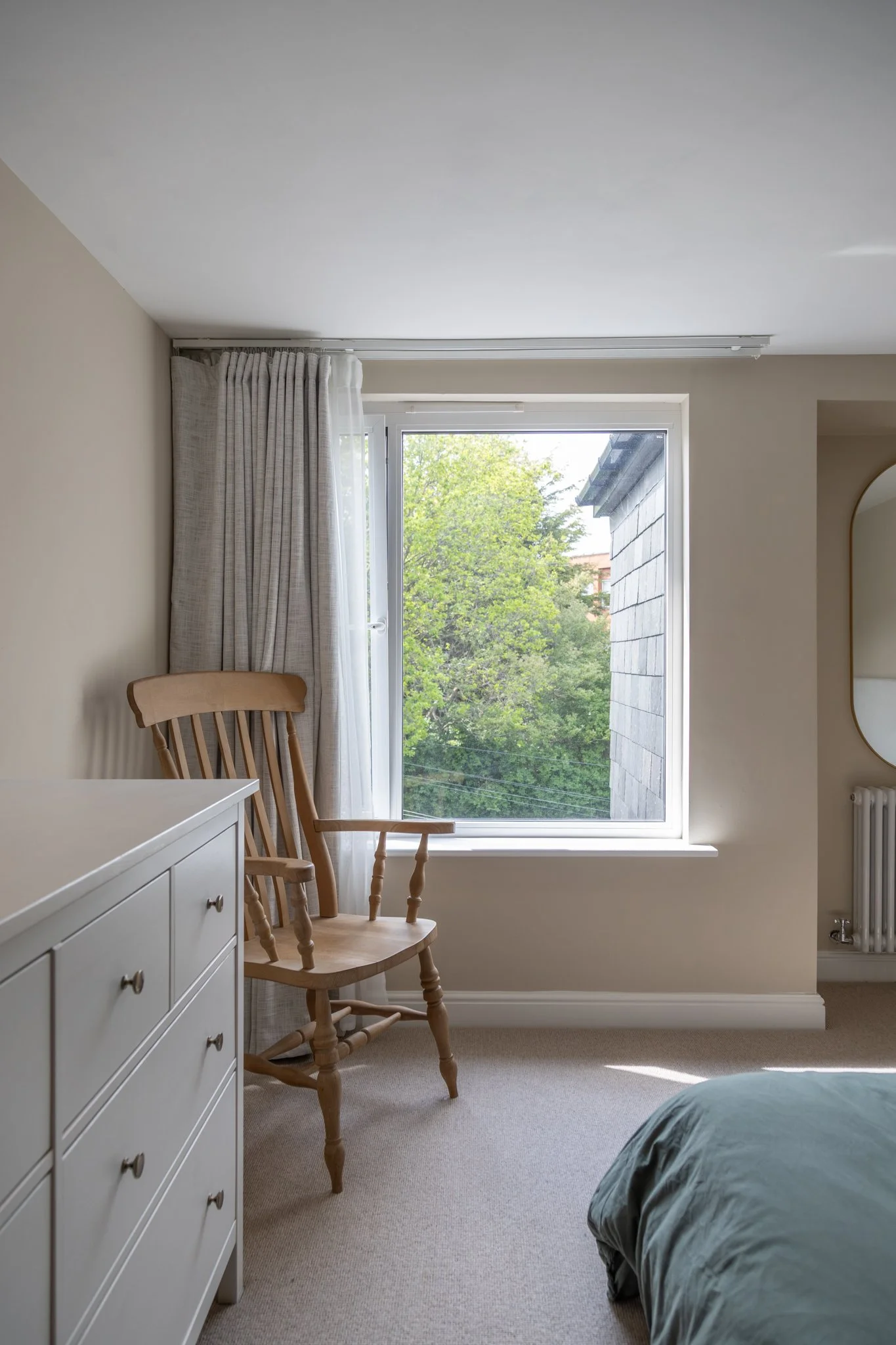
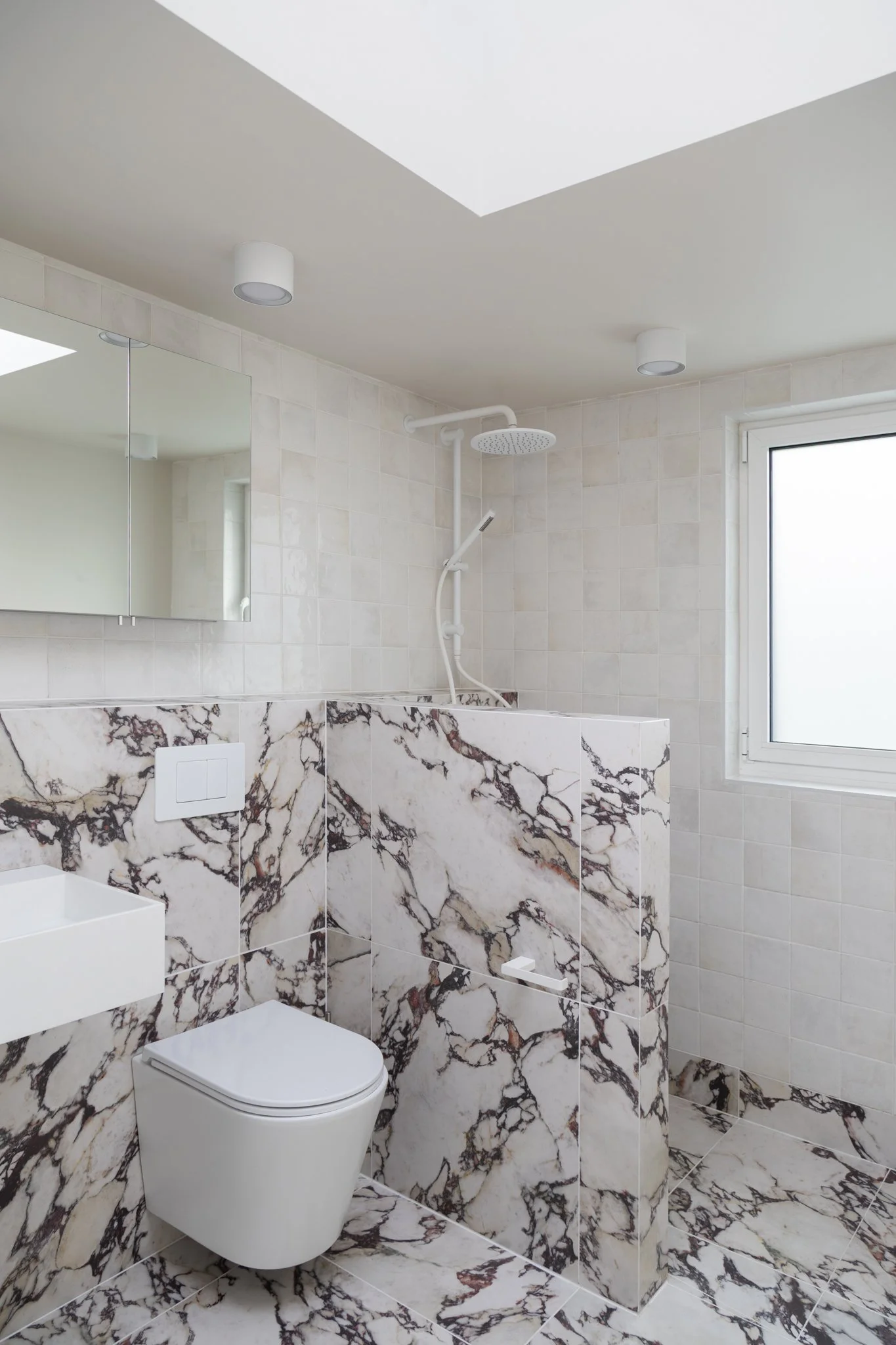
Above, a bespoke staircase and handrail continue the architectural narrative upward to an integrated loft extension. This new upper level accommodates an additional bedroom, eaves storage disguised behind built-in joinery, and a statement shower room. This has maximised the potential of existing roof volume, while creating vital additional accommodation.
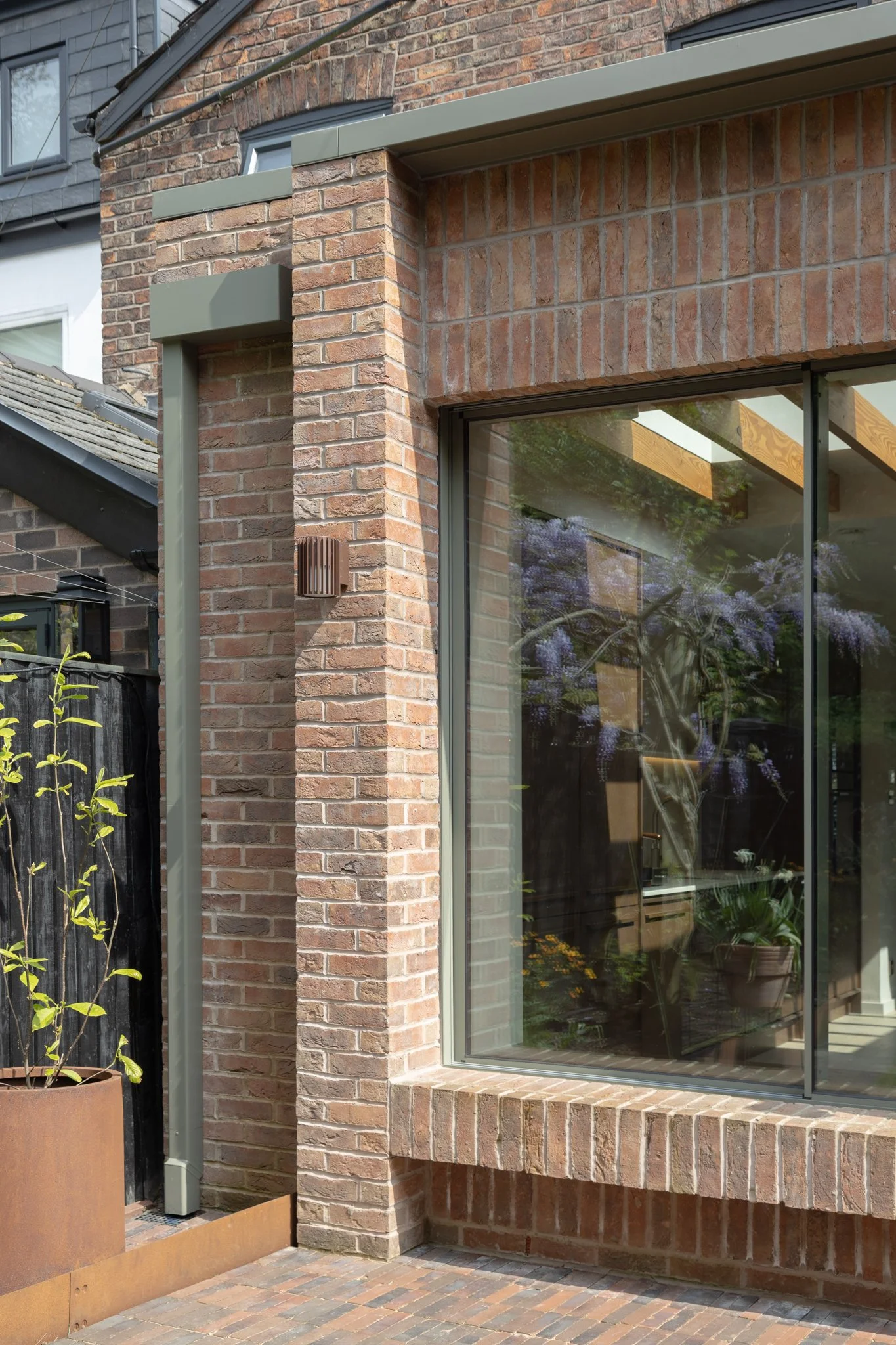
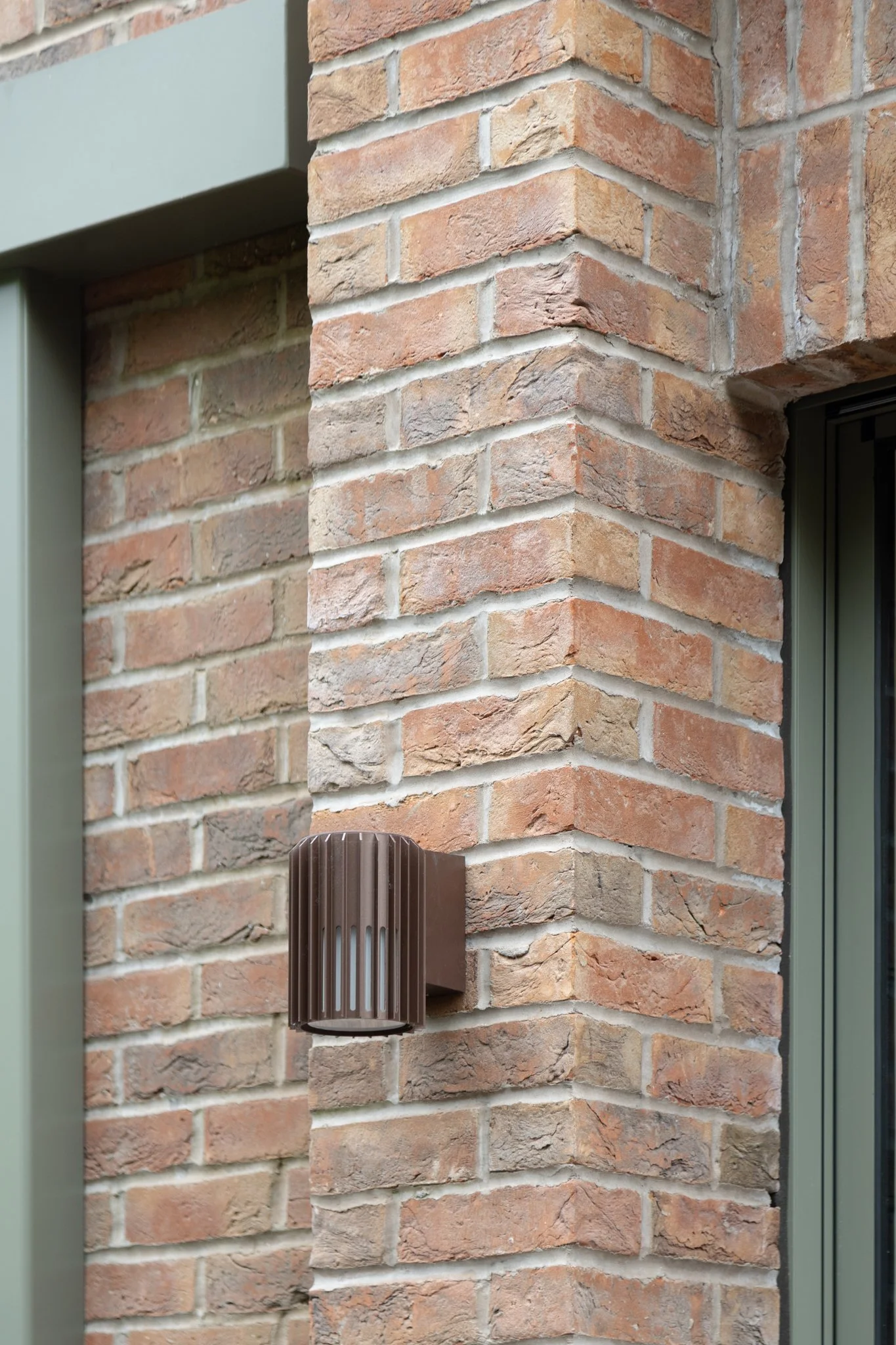
Materially, the new additions to the home are bold yet sympathetic, designed to sit comfortably alongside the original Victorian fabric. The ground floor extension is constructed in brick, but with considerate, contemporary details; a triple soldier-course above the window openings references the brick header detailing of the existing terrace, establishing a connection between old and new.
Ultimately, the project is both a home and a proposition. It’s a model for the reinvention of the Victorian terrace, demonstrating how Britain’s existing housing stock can be adapted, rather than abandoned, to meet the needs of future generations.
Client
Project Type
Location
Stage
Budget
GROSVENOR ROAD
Private
Residential
Altrincham, Trafford
Complete
Undisclosed
Images
Rear Extension
Brick Piers & Window Seat
Brick details
Kitchen with Internal Window Seat
Kitchen overlooking the Ground Floor
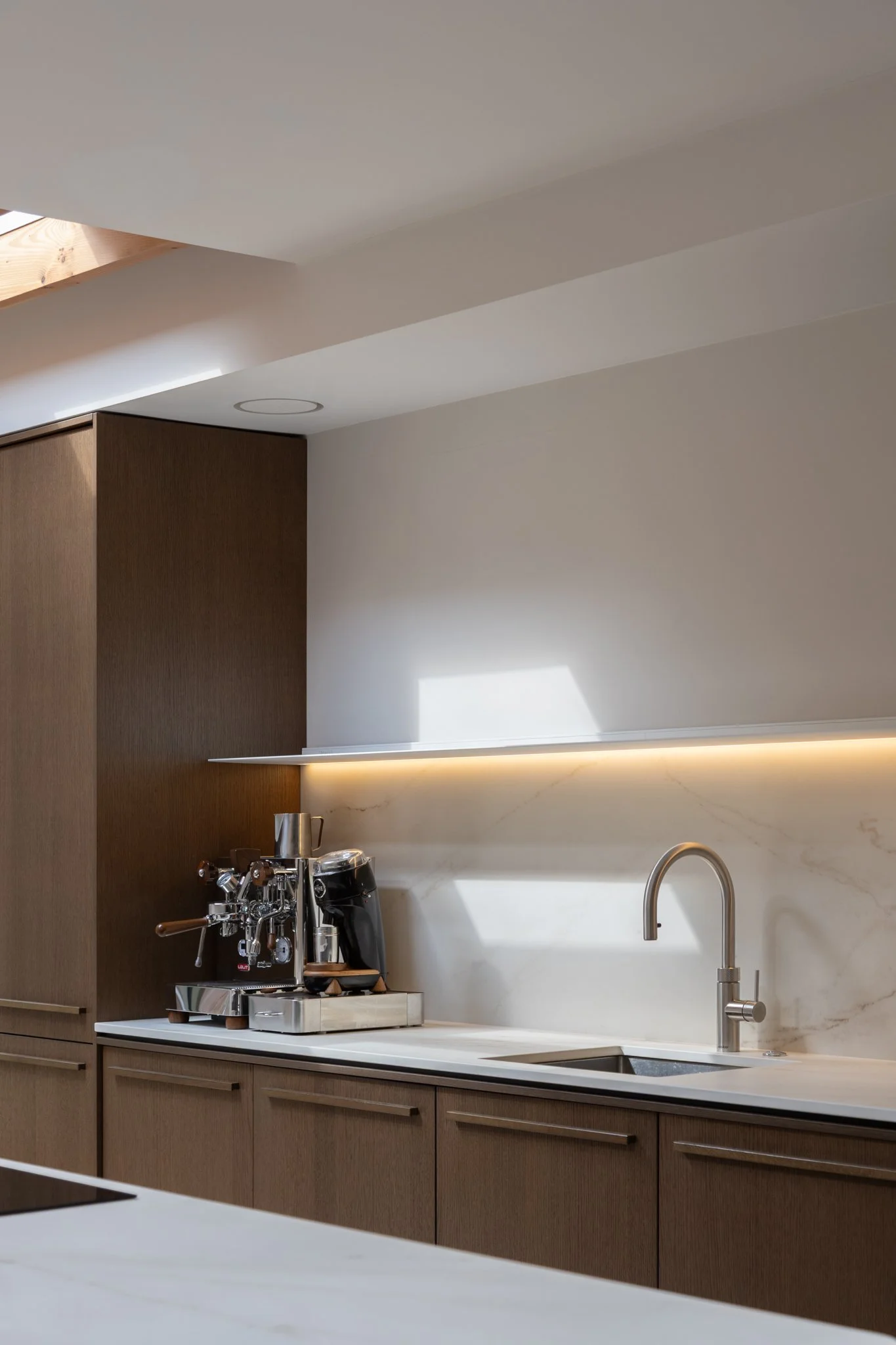
Kitchen Workspace
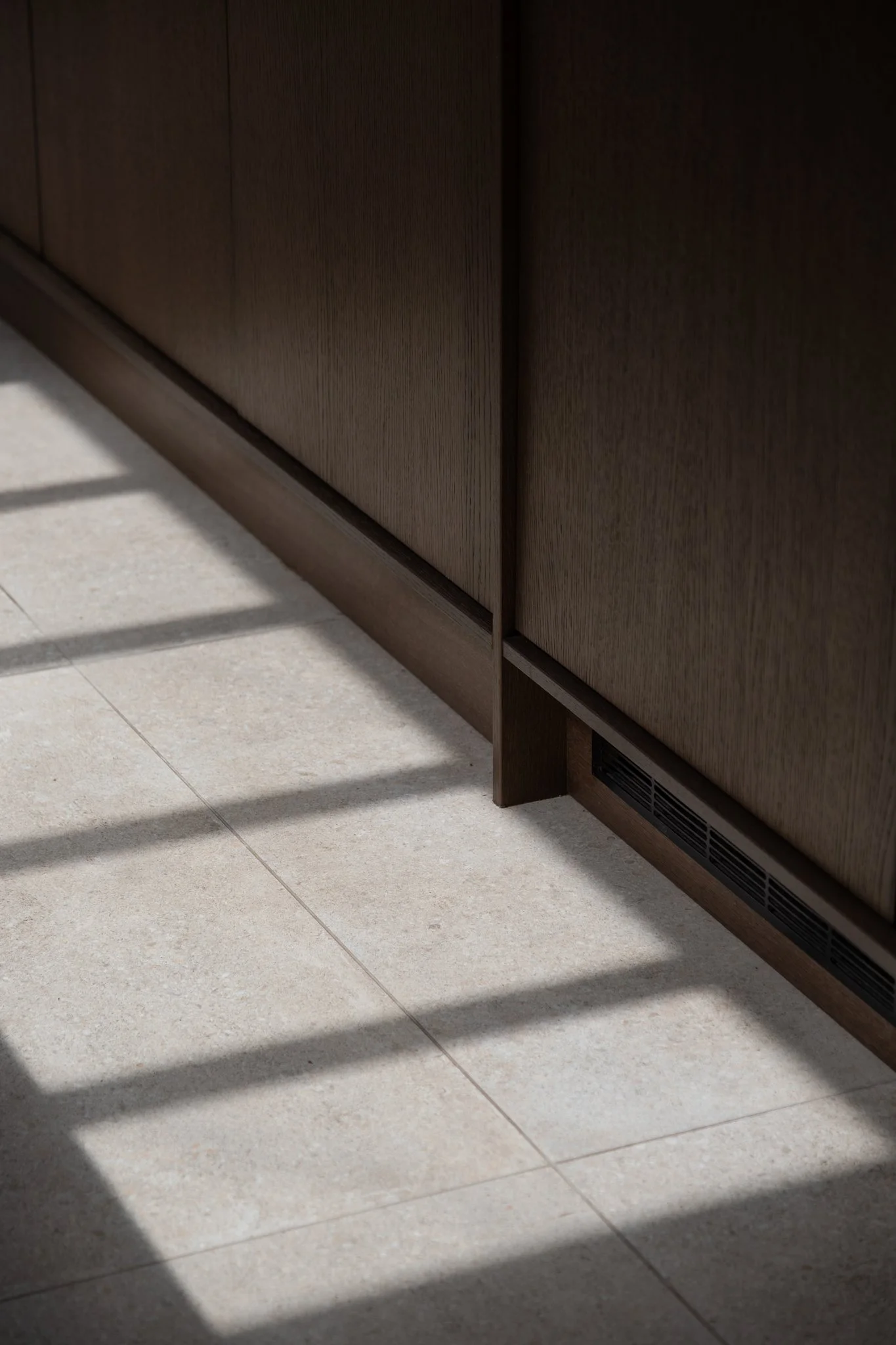
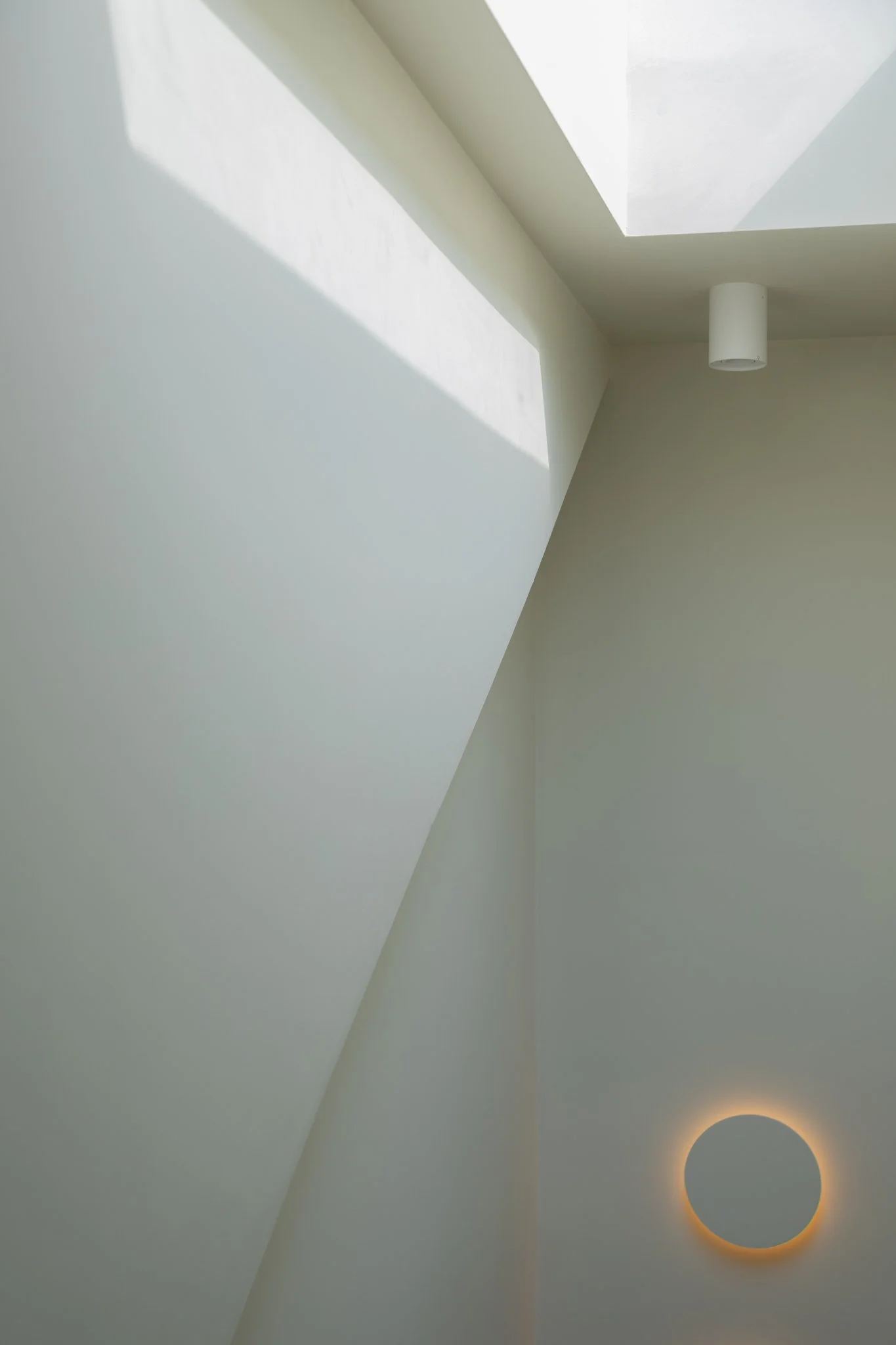
Shadows Cast from the Rooflight
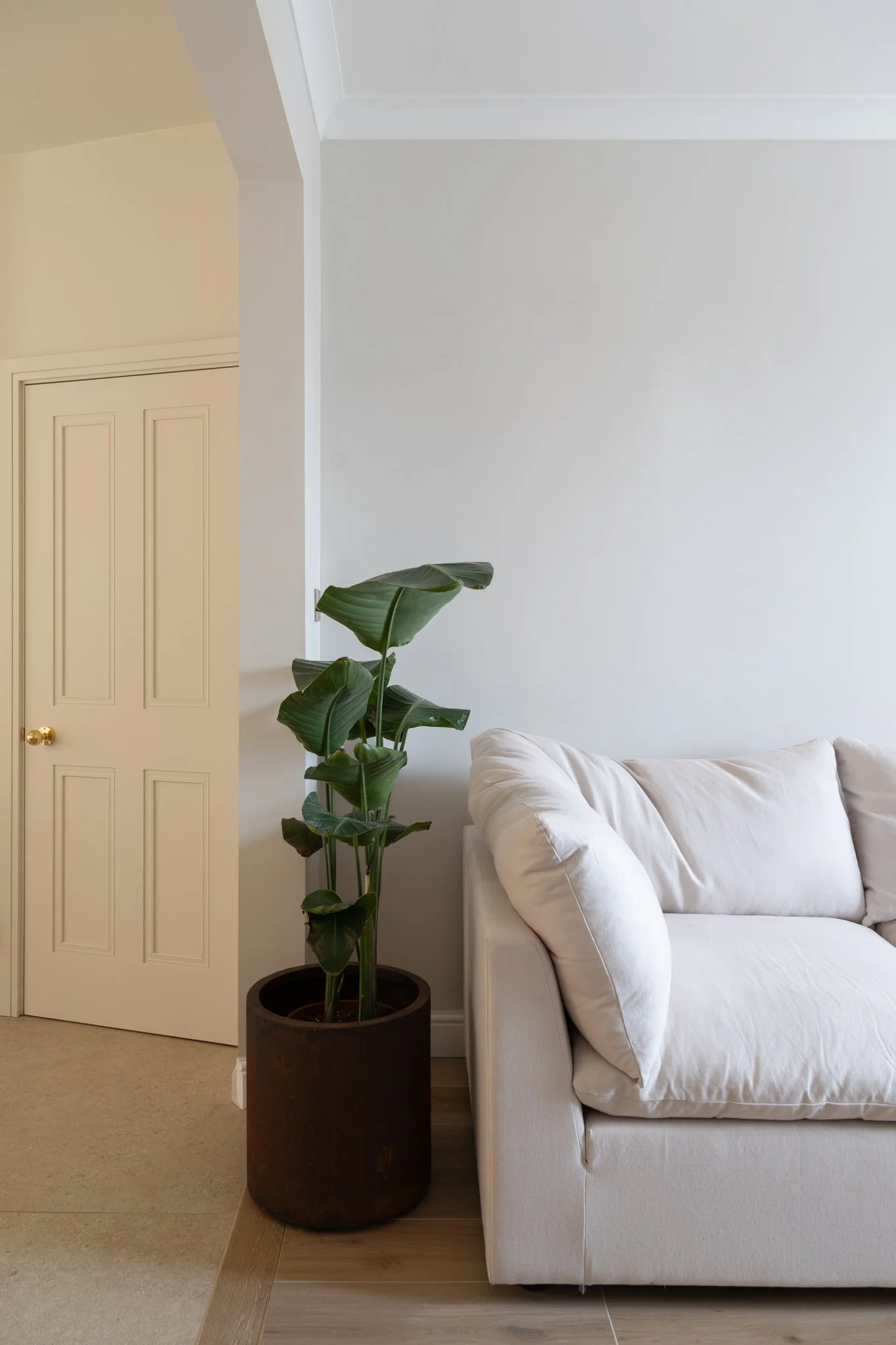
Living Room
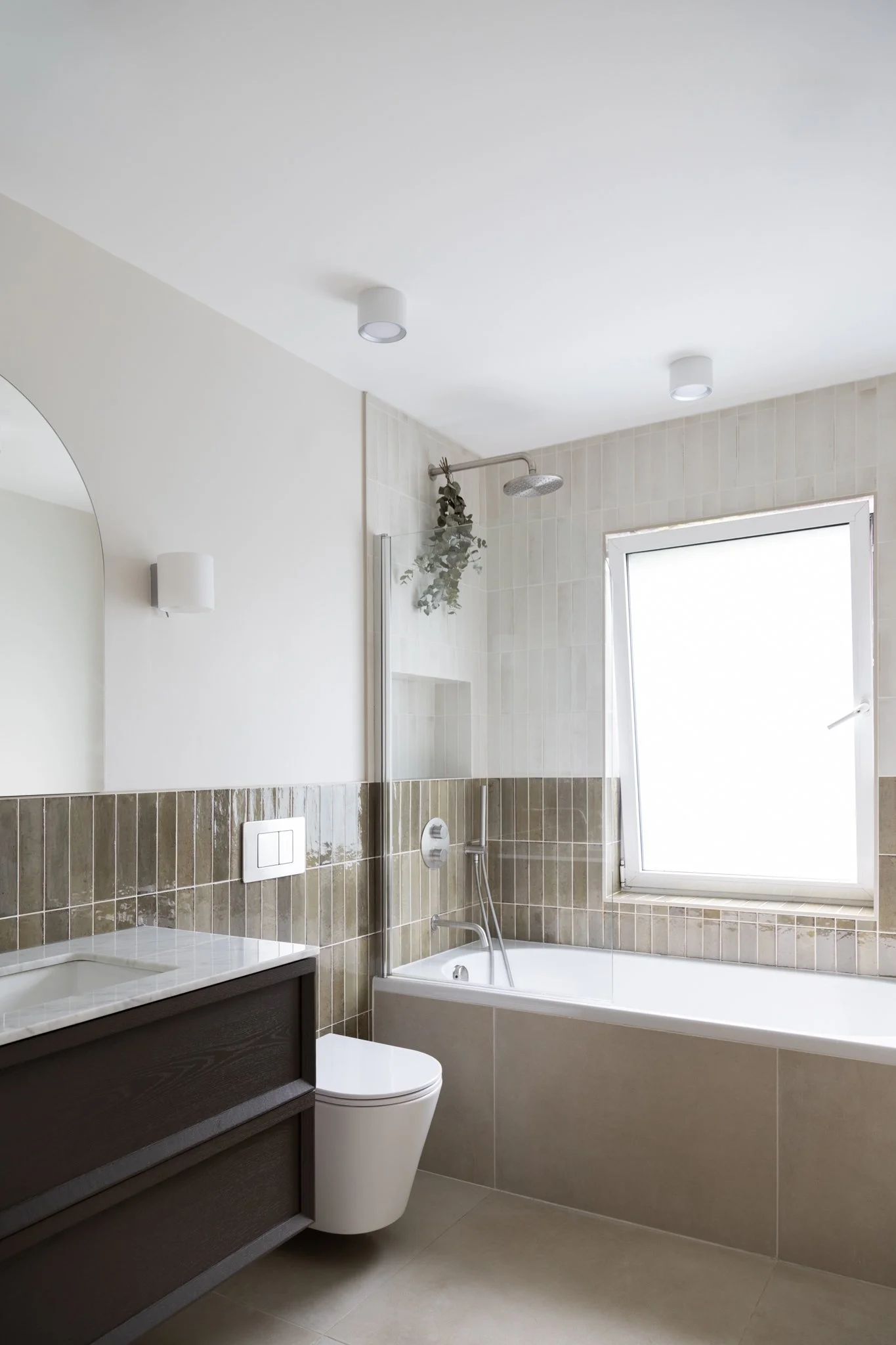
Family Bathroom
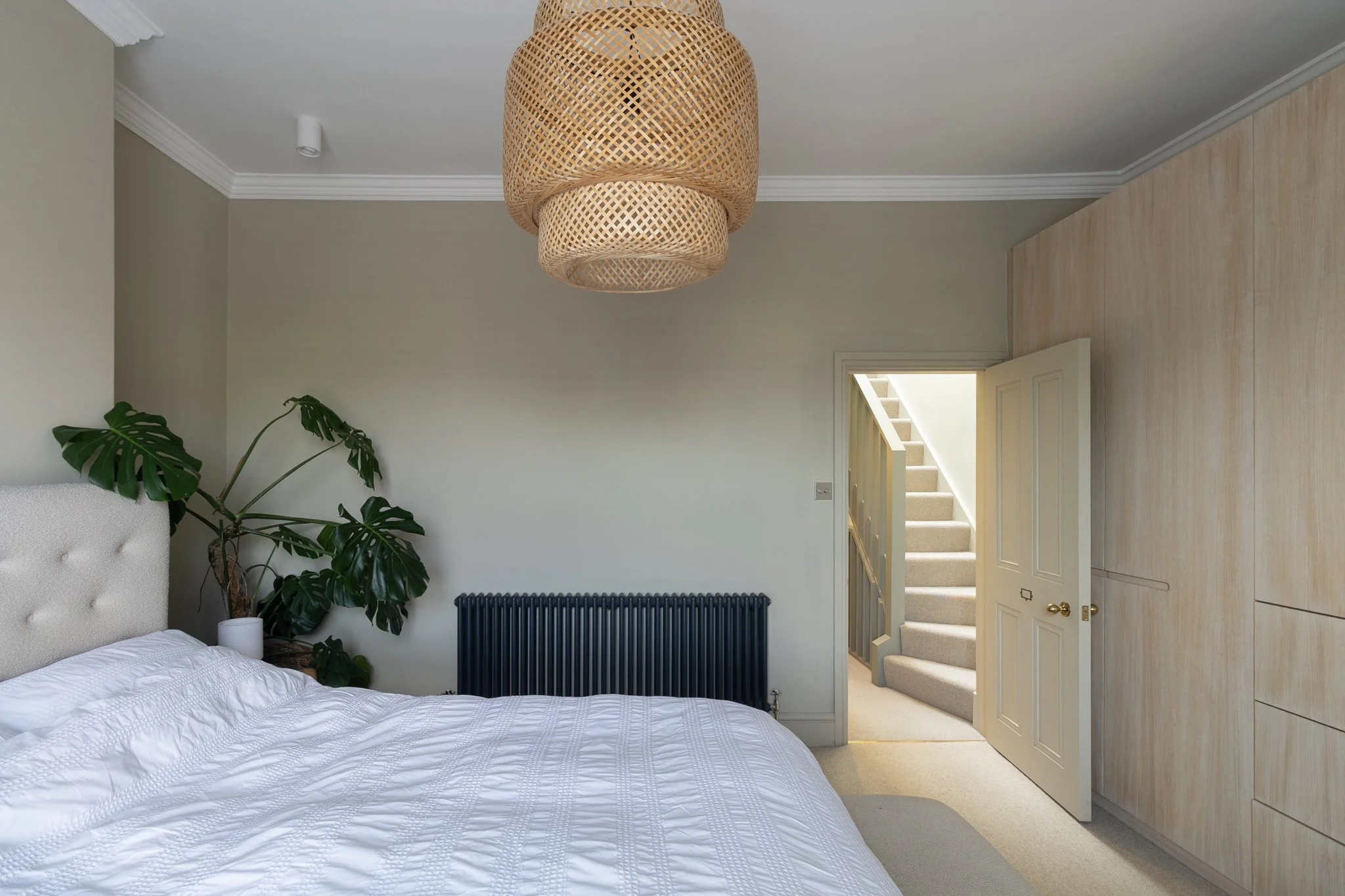
Master Bedroom
Stairwell
Expressed Attic Shapes
Loft Bedroom & Picture Window
Shower Room
Rear Elevation
Photography by Ella Wheatley